
Download PS1 BIOS (All Regions) for ePSXe, DuckStation & RetroArch—USA Guide
Playing PlayStation 1 games on PC or mobile can be thrilling, but without the right PS1 BIOS, many emulators crash, show blank screens, or have missing audio. A PS1 BIOS download provides the key to unlock smooth and authentic gameplay. Whether you are using ePSXe BIOS setup, DuckStation BIOS setup, or RetroArch PS1 BIOS, having the correct BIOS ensures your games run without glitches or lag. This guide will cover everything from PS1 BIOS file downloads to setup instructions for Windows, Android, and iOS.
If you are in the USA, using the right PS1 BIOS USA / NTSC-U can make a huge difference in performance. Even experienced players sometimes struggle with PS1 BIOS not detected or region errors. We provide verified PS1 BIOS full pack and simple setup steps so you can enjoy your favourite classics with authentic visuals, audio, and memory card support.
If you want to play classic PlayStation 2 games, you’ll need the PS2 BIOS to run PS2 games smoothly on emulators like PCSX2 or AetherSX2.
USA (NTSC-U)
This is the North American BIOS used for PlayStation games from the USA and Canada.
Europe (PAL)
This is the official European BIOS for PlayStation games released across Europe, the UK, and Australia.
Japan (NTSC-J)
This is the Japanese BIOS made for PlayStation games released in Japan and other parts of Asia.
Worldwide
This is a universal BIOS that can run PlayStation games from all regions around the world.
What is the PS1 BIOS & Why Do You Need it?
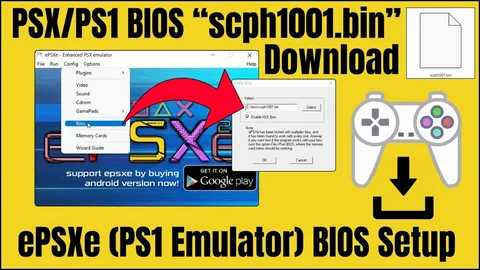
The PS1 game is the brain of the original PlayStation 1 console. It manages game loading, memory card access, and checks the system before starting any game. Without the PS1 BIOS file, emulators like ePSXe, DuckStation, and RetroArch cannot run games properly. Many beginners mistakenly blame the emulator or game file, but the issue usually comes from a missing or corrupted BIOS.
Using the correct PS1 emulator BIOS guarantees PS1 game compatibility and PS1 authentic gameplay. It also fixes crashes, glitches, and audio/video desync issues. The BIOS allows you to save and load games just like on a real console, providing an experience identical to the original hardware. PS1 BIOS setup is essential for both casual players and hardcore fans who want reliability.
PS1 File Information (Size, Format & Requirements)
A standard PS1 BIOS file comes in .bin format, usually under 1 MB. The files are lightweight but critical. All emulators require the BIOS to be in a compatible format, or they will fail to detect it. PS1 BIOS files must be placed correctly in the system folder for PS1 emulator configuration to work.
Requirements vary slightly depending on the platform. For PC, emulators like ePSXe BIOS setup and RetroArch PS1 BIOS need access to the BIOS in a folder such as C:/Users/[Username]/AppData/RetroArch/System. On mobile, tools like ZArchiver allow you to unzip PS1 BIOS for Android / iOS. Always download clean and safe PS1 BIOS files verified for stability and performance.
PS1 Versions by Region
USA / NTSC-U BIOS
The PS1 BIOS USA / NTSC-U is designed for North American consoles. It runs games at 60Hz and is compatible with most titles released in the USA and Canada. Common files include PS1 BIOS scph1001.bin and scph5501.bin, known for reliability and wide PS1 emulator compatibility.
Europe / PAL BIOS
European consoles use PS1 BIOS Europe / PAL, which runs at 50Hz. Some games may feel slightly slower compared to NTSC versions, but they maintain original graphics and audio quality. Popular BIOS files include PS1 BIOS scph5502.bin and scph7502.bin. Correct placement ensures smooth PS1 emulator setup guide for PAL titles.
Japan / NTSC-J BIOS:
Japanese consoles require PS1 BIOS Japan / NTSC-J for games released in Japan and other parts of Asia. This BIOS runs NTSC format at 60Hz but includes language and region restrictions. Examples include PS1 BIOS scph5500.bin and scph7000.bin, offering excellent PS1 game compatibility for Japanese-exclusive titles.
Other Variants (e.g., Brazil)
Some regions like Brazil have unique BIOS versions. Functionally similar to the US BIOS, these are rarely required unless playing region-specific titles. Most emulators work best with PS1 BIOS scph1001.bin regardless of the region.
Which PS1 BIOS is the best?
The USA BIOS scph1001.bin is widely regarded as the most stable and compatible. It works well with both NTSC and PAL games and has fewer glitches compared to other regional BIOS. If you want Play PS1 games without glitches using BIOS, this is the recommended choice.
Where to Place BIOS Files in Emulators?
For PC emulators, place PS1 BIOS files in system folders like C:/Users/[Username]/AppData/RetroArch/System for RetroArch or C:/ePSXe/Bios for ePSXe. DuckStation BIOS detects the folder automatically during setup.
On mobile, move BIOS files into the emulator’s system folder using file managers like ZArchiver. Correct placement avoids PS1 BIOS not detected errors and ensures games run smoothly with all PS1 BIOS features.
Key Features
Authentic Start Up Sequence
The PS1 BIOS recreates the original PlayStation 1 startup experience, including the classic Sony logo and startup sound. This gives you the same nostalgic feel as the original console. It’s not just for show – it also confirms that the BIOS is working correctly and your emulator is ready for games.
High Game Compatibility
Using the right BIOS ensures almost every PS1 game will run smoothly. Titles from different regions, including USA / NTSC-U, Europe / PAL, and Japan / NTSC-J, work without crashes or glitches. This PS1 BIOS feature guarantees reliable gameplay, making sure your favorite classics load perfectly every time.
Memory Card Management
The BIOS handles PS1 memory card management, just like the real console. You can create multiple virtual memory cards, save your progress, and load games whenever you want. This feature also prevents save file corruption and allows you to continue playing from exactly where you left off.
Improved Performance
A proper BIOS optimizes emulator performance by fixing common issues such as slow loading times, crashes, or graphical glitches. Whether you are using ePSXe BIOS setup, DuckStation BIOS setup, or RetroArch PS1 BIOS, the emulator will run faster, smoother, and more reliably.
Audio & Video Synchronization
The BIOS keeps audio and video perfectly in sync. PAL and NTSC games run at their correct frame rates, preventing sound delays or video tearing. Whether it’s action-packed racing or RPG dialogue, your PS1 authentic gameplay will feel as natural as the original console.
Why Download From Us?
We provide PS1 BIOS safe download that is fully tested and verified for all regions. Our PS1 BIOS fast download is quick and reliable, so you can get your files without waiting. This ensures a smooth start for all your emulators.
Even if you are a beginner, our PS1 BIOS guide helps you set up emulators like ePSXe, DuckStation, or RetroArch easily. We keep our PS1 BIOS worldwide files updated regularly. This guarantees compatibility and trouble-free gameplay every time.
How to Setup PS1 BIOS on PC (ePSXe, DuckStation, RetroArch, etc.)
Download the Required Files
Download the following three files:
- Extraction tool or Unzip tool, such as 7-Zip or WinRAR.
- PS1 BIOS file
- Emulator file (ePSXe, RetroArch or DuckStation).
Unzip the Files
Once downloaded, extract the BIOS and emulator files into dedicated folders on your PC. Keep the PS1 BIOS files in their original .bin format, as changing the format can prevent the emulator from detecting the BIOS correctly. Organizing your files in separate folders makes setup easier and avoids confusion later.
Configuration of the BIOS with the Emulator
For ePSXe:
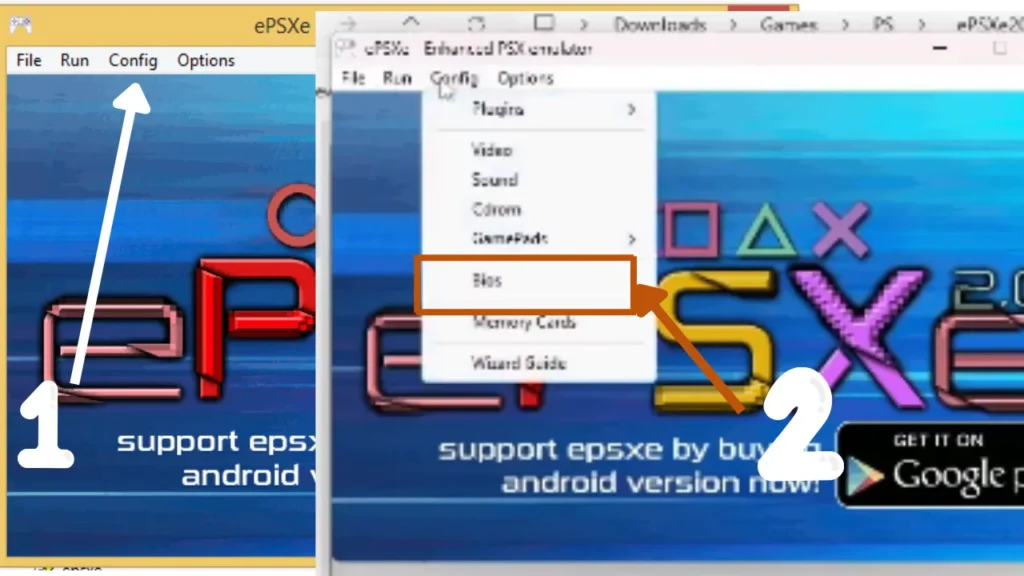
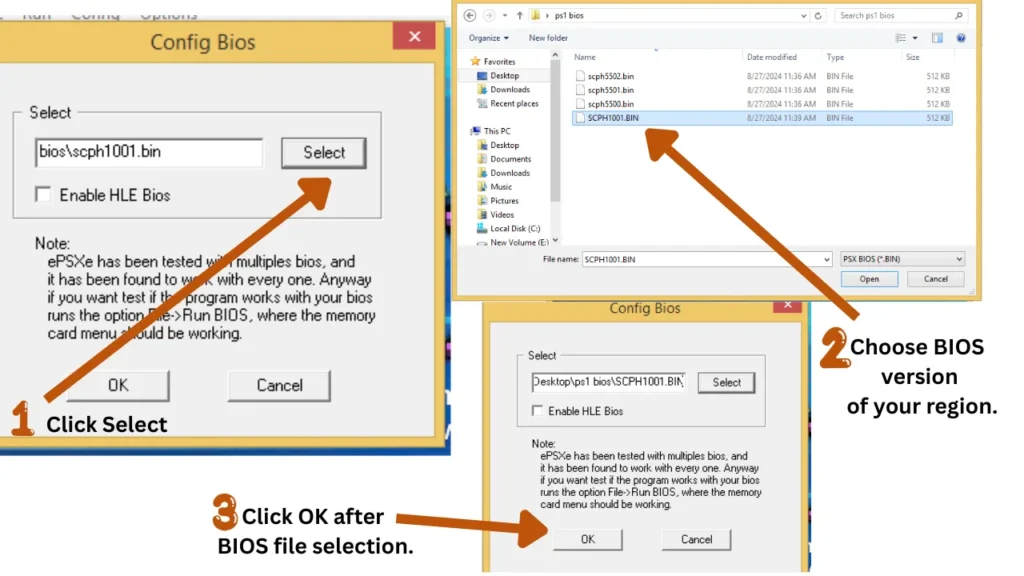
Open ePSXe and go to Config → BIOS. Select the PS1 BIOS file you downloaded. Once selected, the emulator will verify it, and you are ready to run your games. Using the right BIOS ensures PS1 game compatibility and smooth performance.
For RetroArch:
Move the BIOS file(scph1001.bin, scph5502.bin, or scph5500.bin) into the RetroArch Directory System folder.
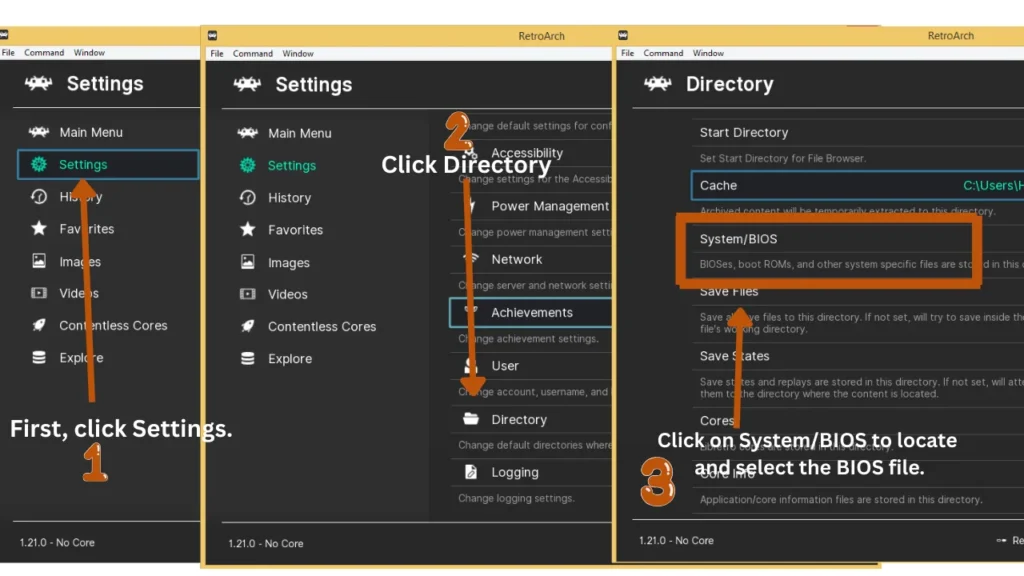
For Windows: C/Users/Your Name/App Data/Roaming/RetroArch/System
For MacOS: C/Users/Your Name/Library/Application Support/RetroArch/System
For Linux: ~/.config/RetroArch/System
Copy the BIOS file into this system folder. When you do this process, the emulator will automatically detect it and configure it.
For DuckStation:
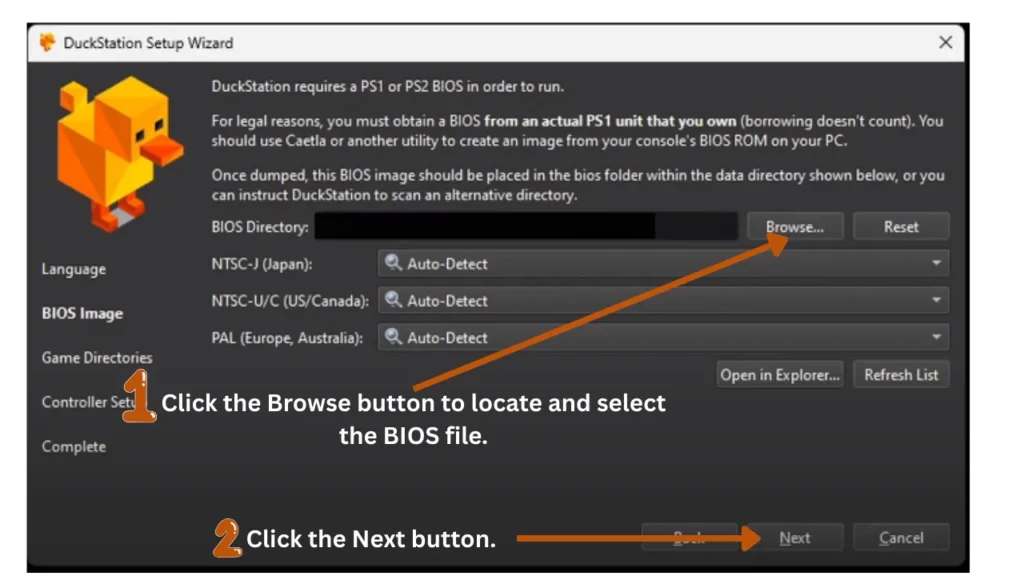
Launch DuckStation and go to the Import BIOS section. Browse and select your BIOS folder, then follow the setup prompts. The app will automatically configure the BIOS, making DuckStation BIOS setup very simple, even for beginners. Once you’re done, you can start your games with authentic PS1 gameplay.
How to Set Up BIOS File on Mobile (Android & iOS)
Download the Required Files
First, you need the PS1 BIOS full pack for your region, a PS1 emulator like ePSXe, RetroArch, or DuckStation, and your game files in .iso or .bin format. On Android, install ZArchiver to unzip the files. Make sure you download the PS1 BIOS safe download to avoid corrupted files.
Unzip the Files
Use ZArchiver (or a similar app) to extract the BIOS and game files into a folder on your device. Keep the BIOS files in their original .bin format, as emulators require this format to detect and configure the BIOS correctly. Organize files in dedicated folders so setup is easy and error-free.
Configuration of the PS1 BIOS
For ePSXe Emulator:
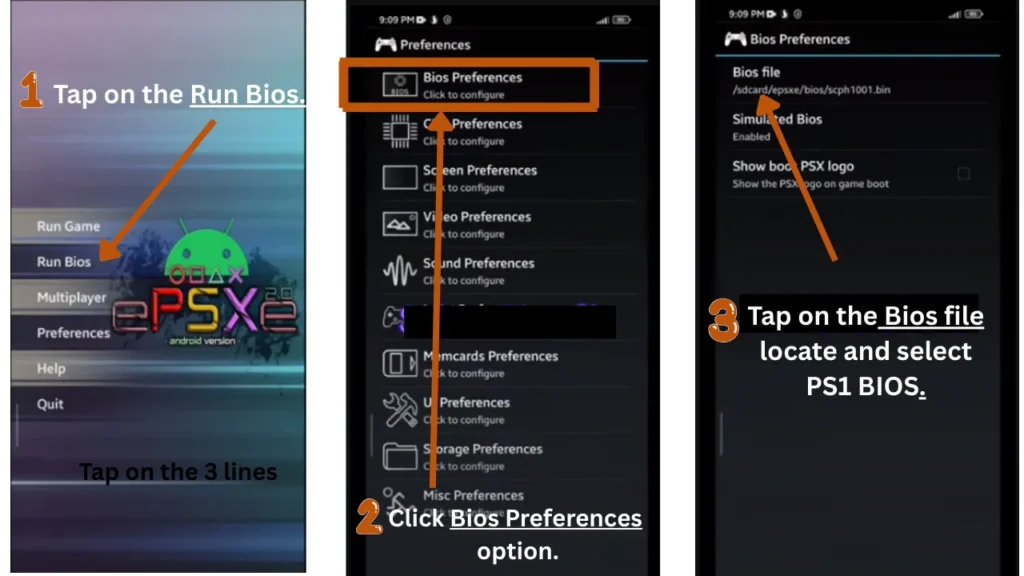
Open ePSXe on your device, tap Run BIOS, then go to BIOS Preferences. Select the PS1 BIOS file from your folder. Once selected, the emulator verifies the BIOS, allowing your games to run smoothly with PS1 authentic gameplay.
For RetroArch (Android & iOS):
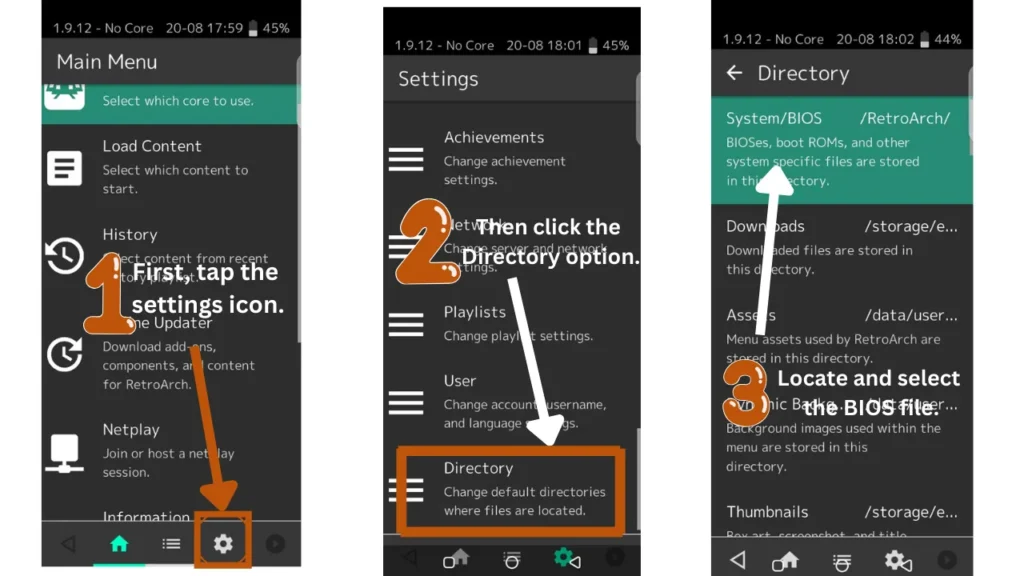
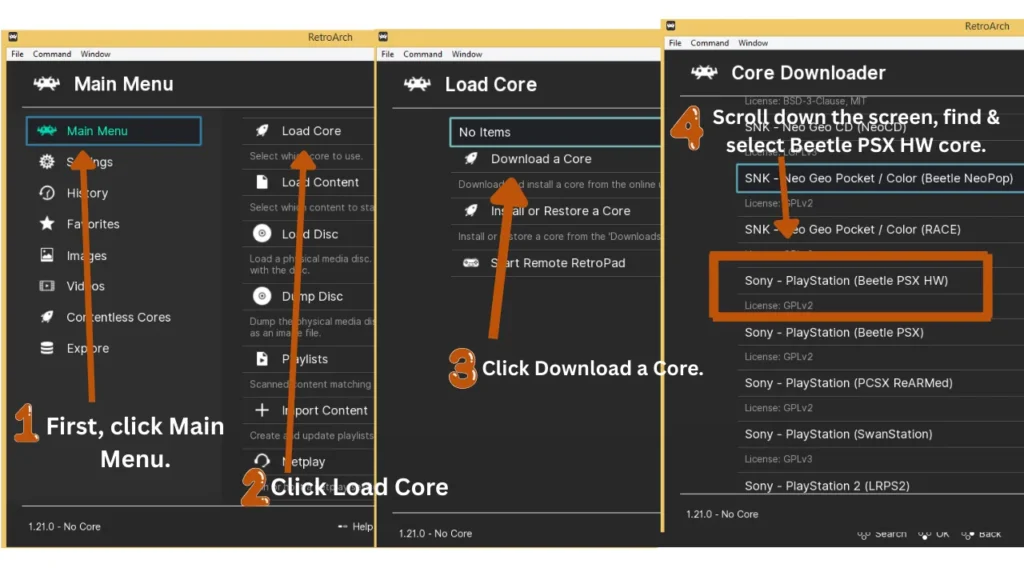
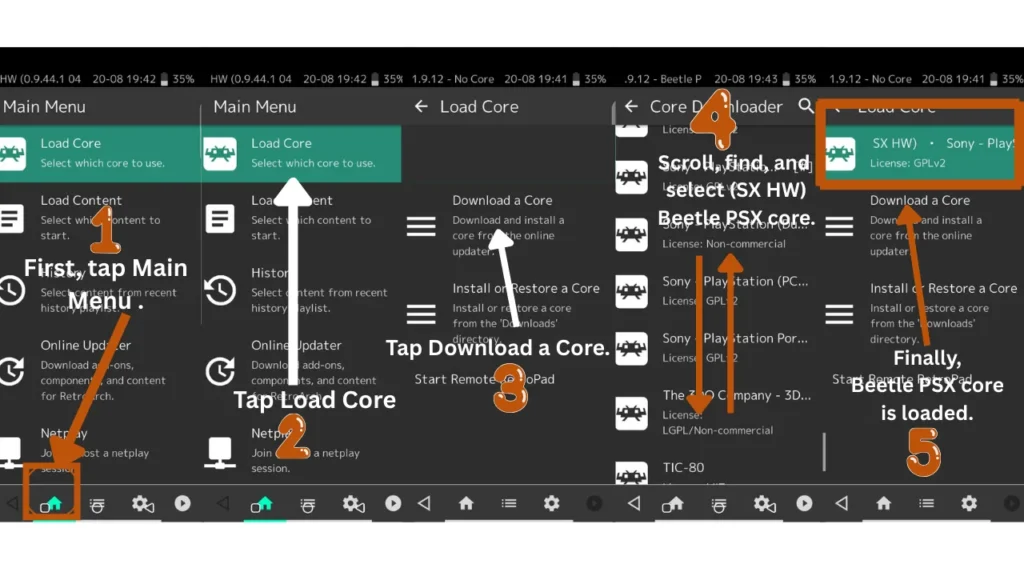
Move the PS1 BIOS file into the RetroArch system folder: /storage/emulated/0/RetroArch/system/. Open RetroArch, load the Beetle PSX core, and the emulator automatically detects the BIOS. This ensures correct PS1 emulator configuration and full game compatibility.
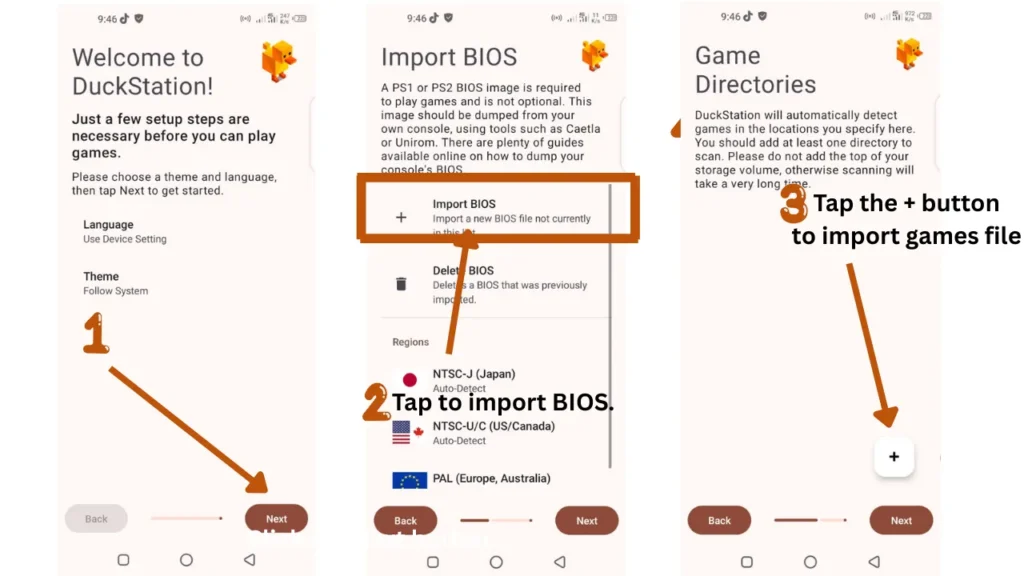
For DuckStation:
Launch DuckStation, tap Import BIOS, and locate the folder where you placed the BIOS. Follow the simple prompts to finish setup. DuckStation will configure the BIOS automatically, giving you a smooth, beginner-friendly DuckStation BIOS setup experience. Once complete, your games will run just like on a real PlayStation 1.
Supported Emulators for PS1 BIOS
ePSXe (for PC & Android)
ePSXe is one of the most trusted emulators for running PS1 BIOS files. It supports memory cards, saves, and works well with most NTSC and PAL games. Beginners and experienced players alike can enjoy stable performance, accurate game speed, and smooth PS1 authentic gameplay using this emulator.
RetroArch (for PC, iOS, & Android)
RetroArch is a versatile, all-in-one emulator platform. It uses cores like Beetle PSX for running PS1 games on multiple devices. RetroArch supports shaders, netplay, custom controls, and ensures smooth performance. Configuring RetroArch PS1 BIOS properly guarantees full PS1 game compatibility across platforms.
DuckStation (for PC & Android)
DuckStation focuses on accuracy and enhanced visuals for a modern PS1 experience. It offers widescreen hacks, fast loading, and a simple DuckStation BIOS setup, making it easy for both beginners and veteran players. With this emulator, your games look great and run smoothly, just like the original console.
Common PS1 BIOS Errors and Fixes
No BIOS Loaded
This happens when the emulator cannot find your PS1 BIOS file. Usually, the BIOS is missing, renamed, or placed in the wrong folder. To fix it, make sure the BIOS is in the correct system folder, like C:/ePSXe/Bios for ePSXe or /storage/emulated/0/RetroArch/system/ for RetroArch. Keep the .bin format unchanged for detection.
Game Crashes After BIOS Screen
If your game crashes right after the BIOS screen, the BIOS might be incorrect or corrupted. Redownload the PS1 BIOS file for your region and ensure it matches your game (USA, Europe, Japan). Using verified PS1 BIOS safe download prevents this problem.
Lagging or Slow Game Performance
Slow gameplay can occur if graphics settings are too high or the emulator is not optimized. Switch the renderer from Vulkan to OpenGL, Direct3D11, or Direct3D12. Reducing resolution, enabling frameskip, or using DuckStation BIOS often fixes lag issues.
Incorrect Region Error
Games will not run if the BIOS region doesn’t match your game. For example, use PS1 BIOS scph1001.bin for USA games, scph5502.bin for Europe, or scph5500.bin for Japan. Correct matching ensures smooth PS1 game compatibility.
Corrupted Save Files
Sometimes old saves or memory card files can get corrupted. Clear any old saves and create a new memory card in your emulator. Always save before exiting and format the memory card in emulator settings to prevent future issues.
Game Freezes or Stutters During Cutscenes
Freezing can happen due to an incompatible BIOS or improper video settings. Try using a different BIOS file, adjust video sync settings, or lower the resolution to fix this issue. This ensures PS1 authentic gameplay continues smoothly.
Disc Image Not Detected
If the emulator cannot detect your game, the file may be corrupted or in the wrong format. Check that your game is in .iso or .bin format. Converting the game to the correct format and pointing the emulator to it fixes this problem.
Graphics Glitches or Screen Tearing
Visual issues like pixelation or missing textures usually come from incorrect GPU settings. Enable V-Sync, update the graphics plugin, and adjust rendering options. These tweaks remove glitches and improve the overall PS1 BIOS features experience.
High CPU Usage or Overheating
Some emulators demand too much power, causing your device to heat up or lag. Reduce graphics filters, lower resolution, and disable intensive shaders. Using optimized emulators like DuckStation helps prevent high CPU usage.
Audio Desync or Lag
Audio may be out of sync if PAL or NTSC frame rates don’t match. Adjust the audio latency in emulator settings, enable audio sync, and make sure the BIOS matches the game region. This keeps PS1 audio-video sync perfect.
Is Downloading PS1 Legal? (Copyright & Usage Guide)
Downloading PS1 BIOS for personal use is usually tolerated, but sharing or distributing it is illegal. Always use a BIOS from your own PlayStation or from trusted sources. Following this rule and using a PS1 BIOS-safe download ensures you stay legal while enjoying authentic gameplay.
Stick to personal-use emulation and avoid piracy. This way, you can experience your favourite PS1 games without breaking copyright laws. Using the right BIOS keeps your setup safe, stable, and fully compatible with all emulators.
Conclusion
A proper PS1 BIOS download unlocks smooth and authentic PlayStation 1 emulation on PC, Android, and iOS. Using PS1 BIOS all regions ensures your games work perfectly, whether you are playing USA / NTSC-U, Europe / PAL, or Japan / NTSC-J titles.
Following our guide guarantees fast setup, stability, and the full nostalgic experience of the original console. Play PS1 games without glitches using BIOS and enjoy every classic title exactly as it was meant to be.